MAGAZINE
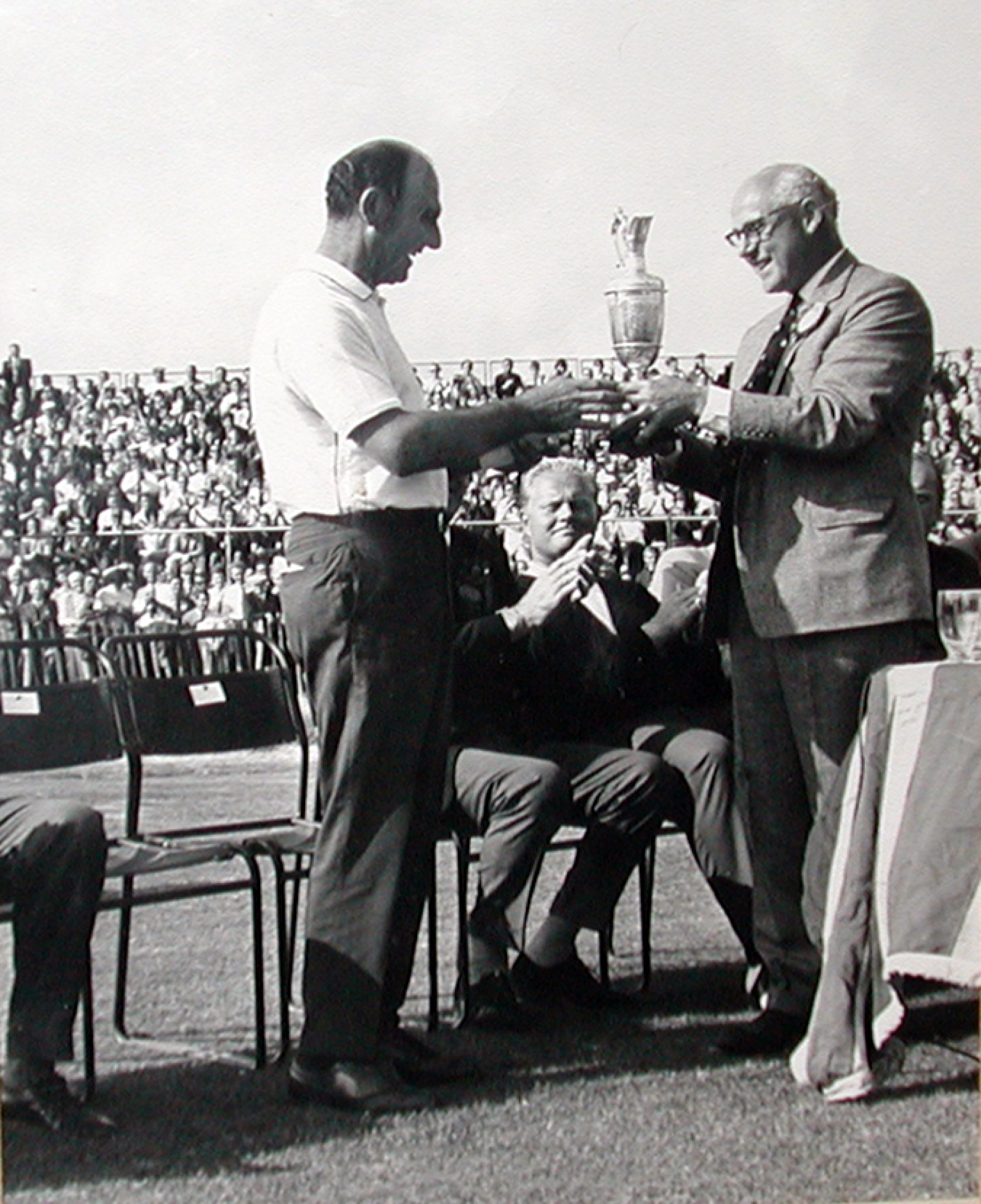
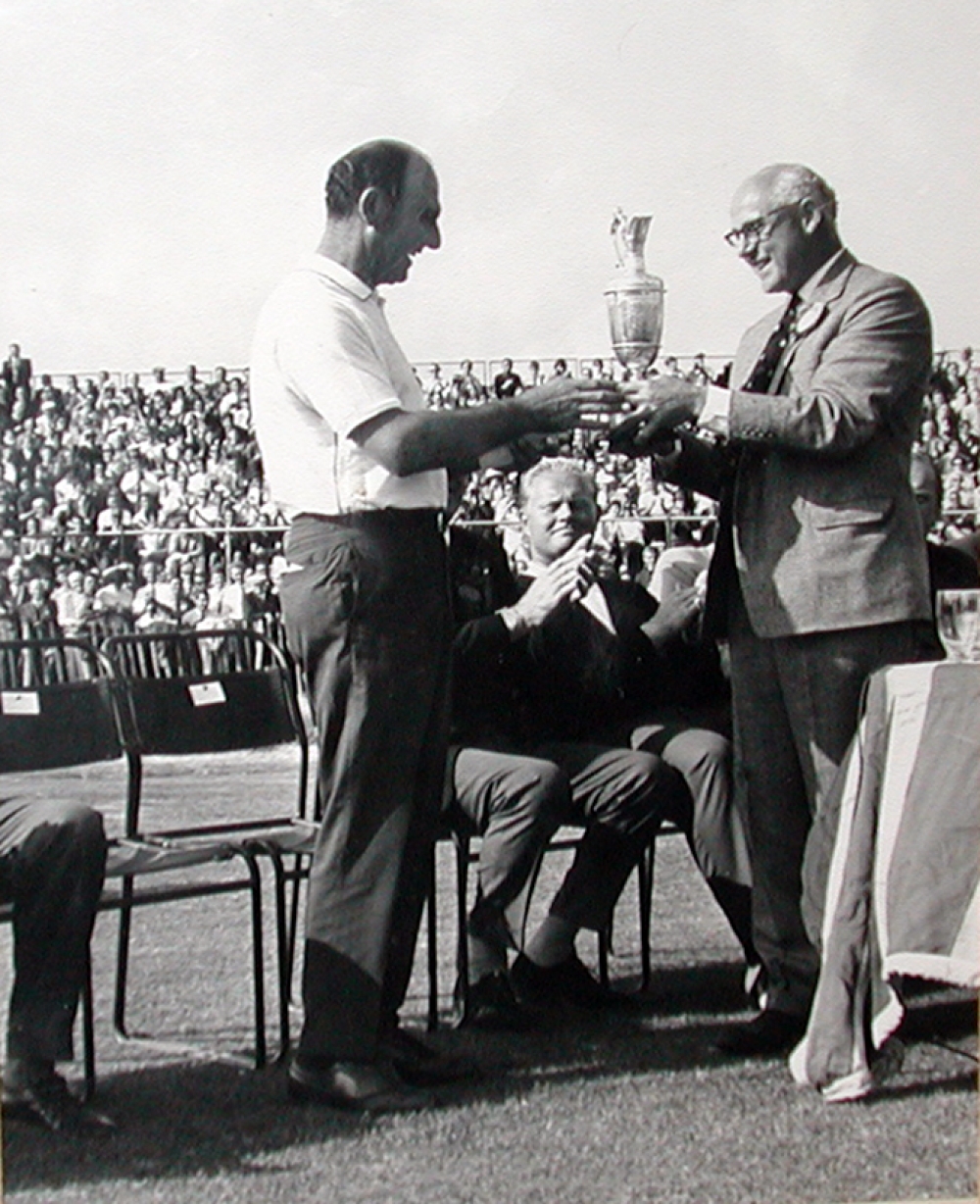
By all accounts The 96th Open was a great success. The Claret Jug was handed to a fan favourite who had realised a long-held dream and, in the process, beaten the great defending Champion Jack Nicklaus by two shots.
At the time there seemed little reason why Hoylake should not soon stage The Open for the 11th time.
It didn’t work out that way, and perhaps there is a clue as to why when, in January 1968, The R&A revealed that the ‘66 and ‘67 Opens had made losses. While noting that the prize fund had risen from £1000 in 1946 to ‘the present day figure’ of £15,000, The Scotsman newspaper revealed that losses of between £1000 and £1500 had been incurred by the last two Championships. Wilbur Muirhead of The R&A said that the cost of staging the Hoylake Open had been north of £40,000, but added that he wasn’t worried by shortfalls. He emphasised that The Open was not sponsored, and added that “we intend to keep it that way. It is a prestige tournament with the honour of victory more rewarding than the actual monetary value of the prizes.”
That said, it was clear that “while the Open Championship fund has sufficient reserves to withstand quite considerable losses for a few years, the committee must search for ways and means to meet the promotion costs each year.” There was immediate speculation that the price of entry, then ranging from 10 shillings to £1 per day, would be increased.
Still, losses of a few quid didn’t sound so bad, and extra gate money might easily cover them, but perhaps a seed of doubt had been sown - that Royal Liverpool could not cope with what was becoming, and had to become, something which is not just a golf tournament but also a massive event.
Anthony Shone, Royal Liverpool Trustee and mine of Hoylake information, provides the background. “Up until the 1950s The Open was, by today’s standards, low key. Organisation was in the hands of the host club with input from the R&A Championship Committee. It took place from Monday to Friday, the pros having to be back at their clubs to look after the members at the weekend. There were qualifying rounds on Monday and Tuesday and the Championship started on Wednesday and finished with two rounds on Friday.
The ‘66 and ‘67 Opens had made losses
“Facilities on the course for spectators were no more than simple catering and an exhibition tent for equipment manufacturers to display their wares. Spectators were able to follow players on the fairway and were controlled by volunteer club members. Score boards were minimal so often knowing who was doing what was not easy to discover.
“The 1960s brought great changes. Arnold Palmer’s arrival in 1960, and his wins in 1961 and 1962, lit a fuse that led to a rapid explosion. Others from overseas followed Palmer’s example and new issues had to be addressed.
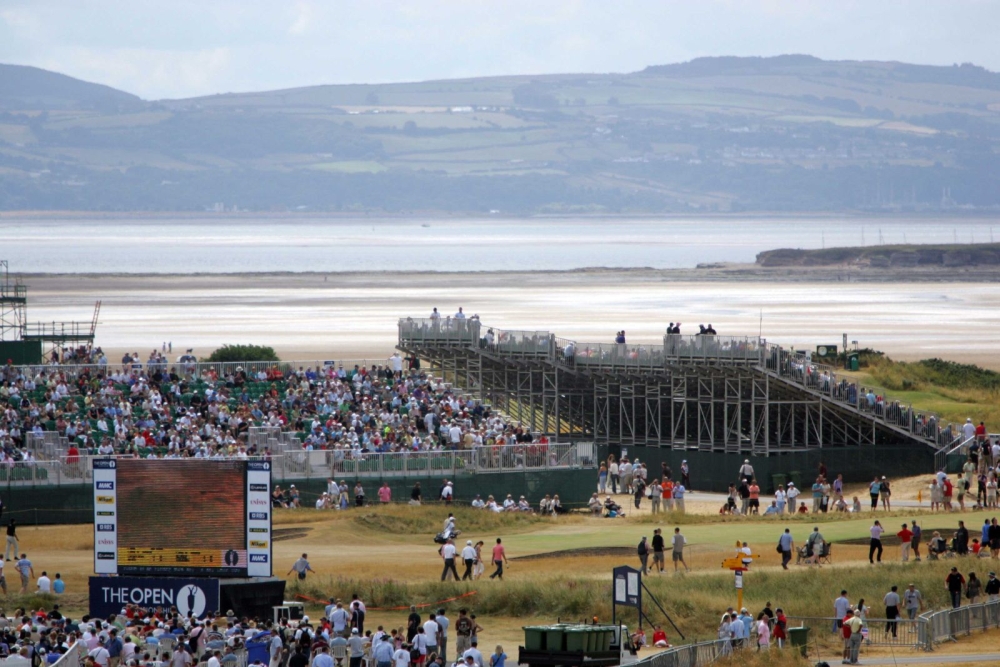
“First, exemption from playing in the qualifying rounds was given to the leading players in the world. There had been indications they would not enter and run the risk of failing to qualify. Secondly the commercial benefits of the event started to be recognised. Television was raising interest and hospitality facilities were needed to enable companies to entertain business connections - the start of the tented village. This led to the third development which was the need to make watching the golf easier and more pleasant. Preventing spectators from following the players on the fairways was introduced so that more people could see and stands were erected at key points notably round the last green.
Royal Liverpool had an image problem which only got worse
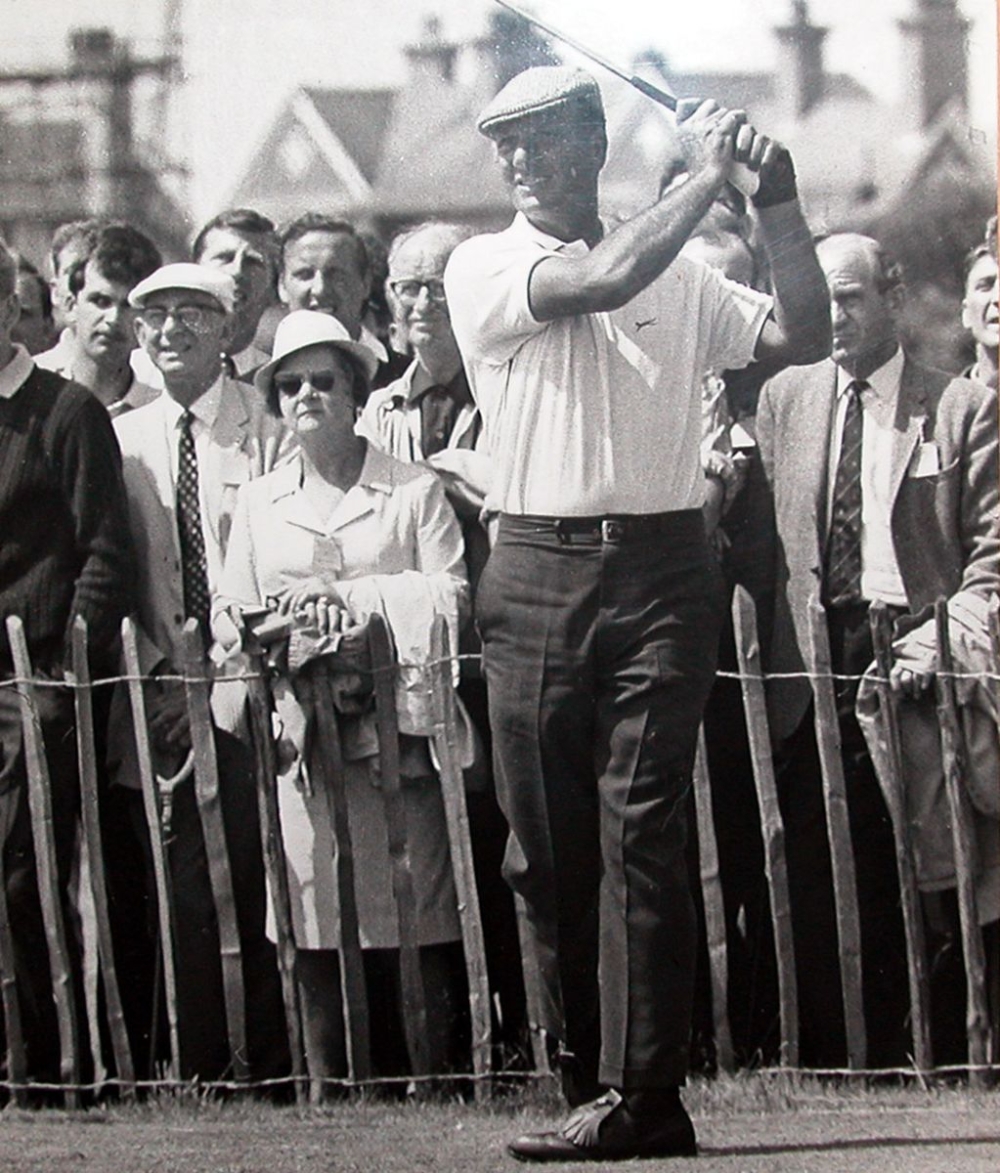
“In 1967 at Hoylake the bulk of the organisation was in the club’s hands as The R&A staff was still little more than the secretariat. Stands for 5750 people were erected at nine holes, and in contrast to the impressive structures of today they were just scaffolding and planks. To keep spectators, who were used to following players at close quarters, off the fairways substantial chestnut pale fencing was erected. And, critically, it had to be positioned where there was minimal chance of it interfering with play. Through the need to take into account changing wind directions space for spectators was considerably reduced. This led to the erroneous perception that the course could not cope with the growth in numbers. The fact was that when spectators got used to not following on the fairway, fencing could be replaced with post and rope to keep them back and more space for spectators became available.
“The Championship was a success, and there was no belief that Hoylake wouldn’t be asked to hold it again in the 70s. However, growth became spectacular and, from 30000 in 1967, attendance had reached 85000 by 1975 and 131000 by 1980. The event had expanded from three to four days with the leaders going out last on the final two days. This added to the event’s attraction and created more demand.”
So Royal Liverpool had an image problem which only got worse as The Open expanded. There wasn’t enough room for spectators, a serious misconception. The road network was inadequate, although the first phase of the M53, which gives access to Hoylake, opened in 1972. Car parking was in short supply, which was kind of true inasmuch as the Hoylake municipal course, which would solve the problem, could not be used at the time. Royal Liverpool’s importance to the history of golf in general and The Open in particular counted for naught.
It wasn’t until 1997 that serious discussions about the possibility of a return began. Anthony Shone again: “The outlook for Hoylake had looked bleak. For almost three decades our regular approaches to The R&A were always met with the perceived negatives. This was in marked contrast to the reactions later on when R&A officials recognised and emphasised the positives.
“Serious discussions on the possibility of a return commenced in October 1997. To avoid media rumour, secrecy was insisted on and Wirral Council, whose help was important, could not be put in the picture until August 1999. The eventual announcement that Hoylake could host the Championship was made in February 2001 with 2006 being announced later in the year.”
This would be the 135th Open. Eight days before the first round, a 34 day conflict between Israel and Hezbollah began. Three days earlier, in Germany, Italy won the World Cup by beating France and Zinedane Zidane was sent off for headbutting. Twitter and Facebook launched that year, and Shakira’s Hips Don’t Lie was the song of summer.
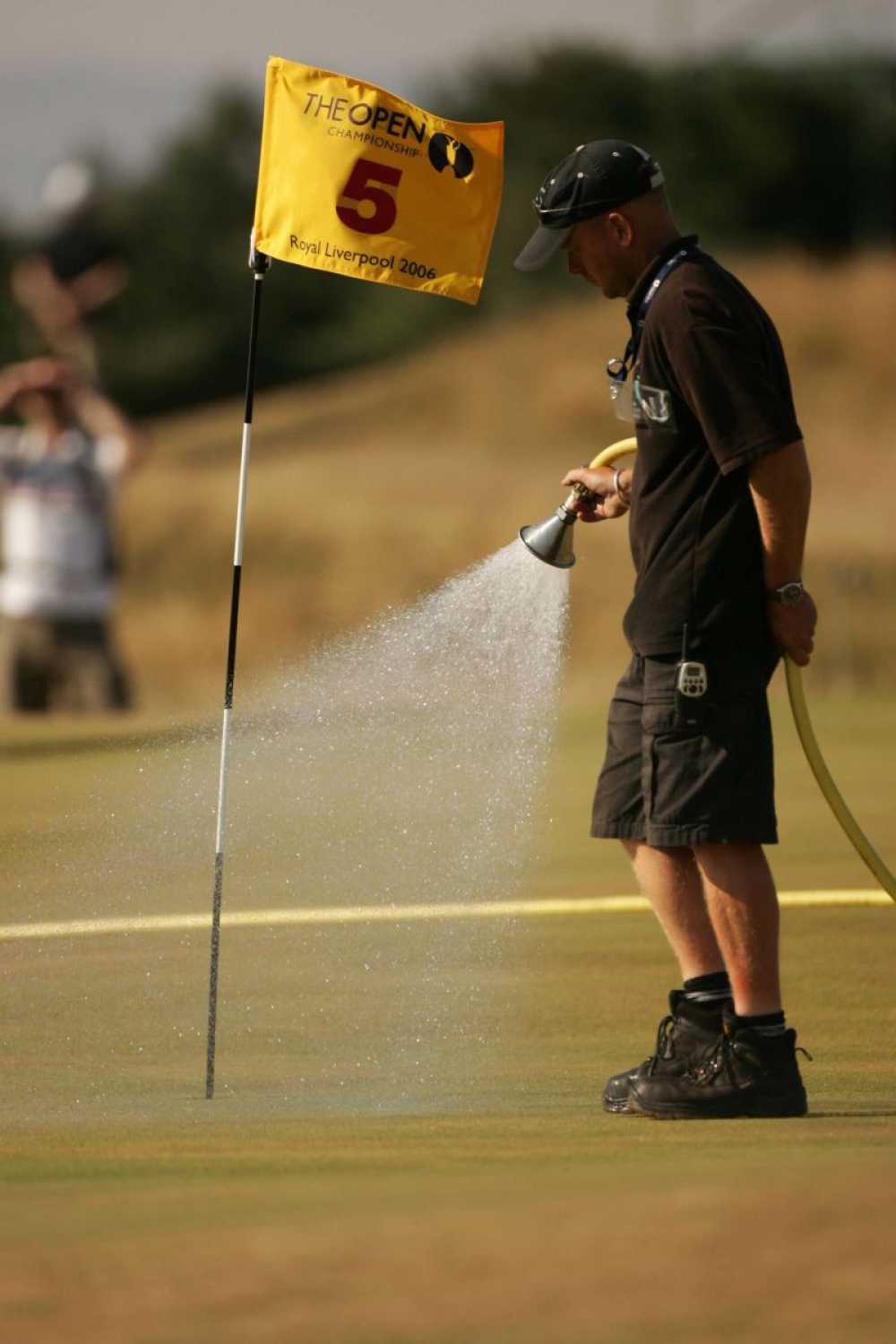
And what a summer it was. A heatwave. Temperatures regularly in the mid-30s - and a golf links baked brown and in some places white. You could feel the heat rising from the turf as your footsteps crackled on it. On television the course looked like the surface of another world; or, as Marina Hyde wrote in the Guardian, something closer to home. “At times at the 135th Open in Hoylake, it has seemed that it might be more appropriate for commentary to be provided by Sir David Attenborough as opposed to Peter Alliss. There are areas of the Kalahari more verdant than the fairways of Royal Liverpool in their present state, and one half expects the familiar tones of that national treasure to drift across the airwaves, alerting the audience to the impending arrival of a herd of wildebeest or antelope over the crest of a fairway.”
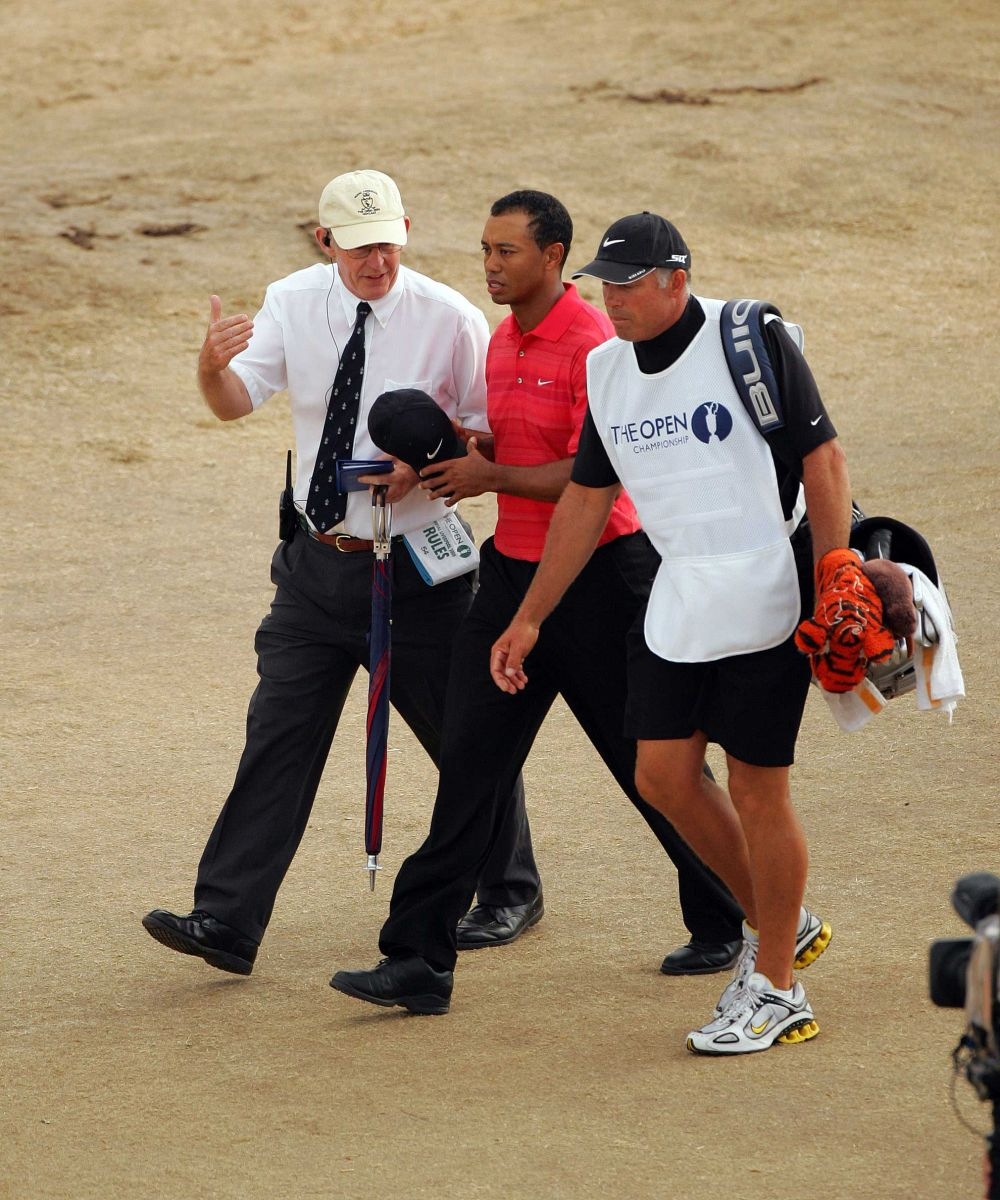
The atmosphere was fiery. So were the fairways and greens - and almost 230,000 people turned up to watch Tiger Woods put on a stunning display of ball striking and crativity.
The Open had returned to Hoylake in unforgettable style.
There are areas of the Kalahari more verdant than the fairways