MAGAZINE
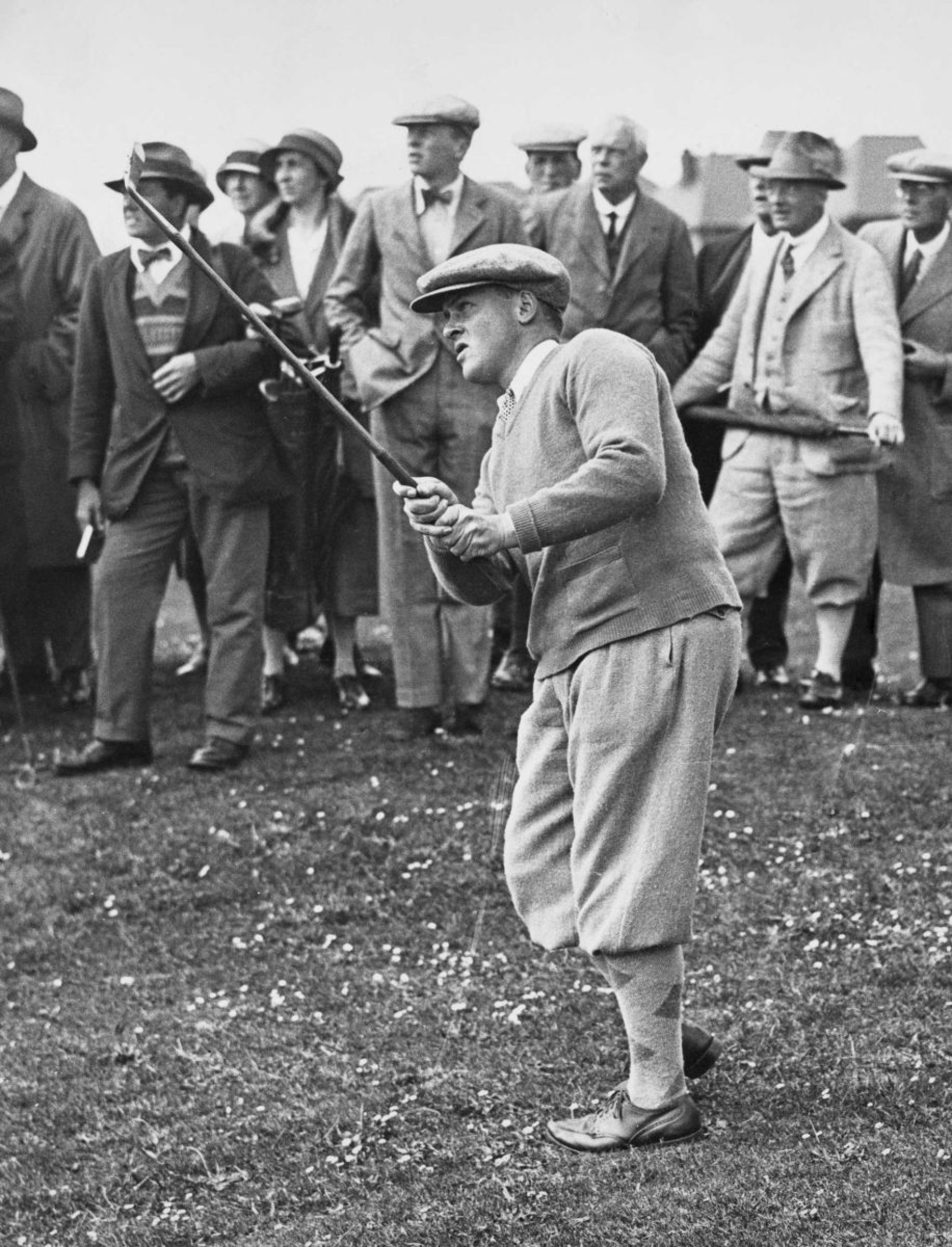
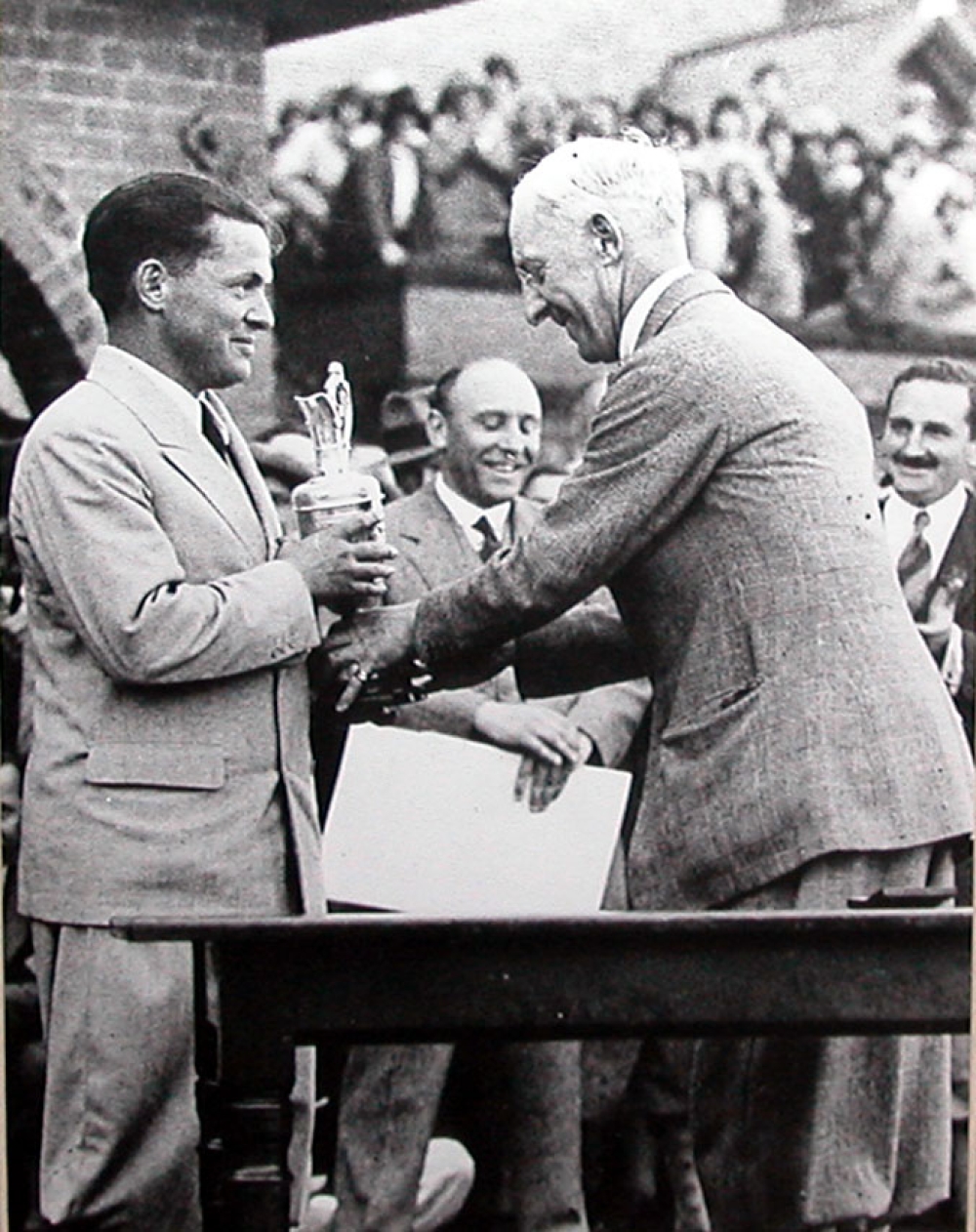
His name was Bobby Jones, the Champion Golfer of 1926, and the American’s victory at Royal Lytham persuaded the 24 year old that in the near future he could pull off an extraordinary golfing achievement in which the Hoylake links would play a vital role.
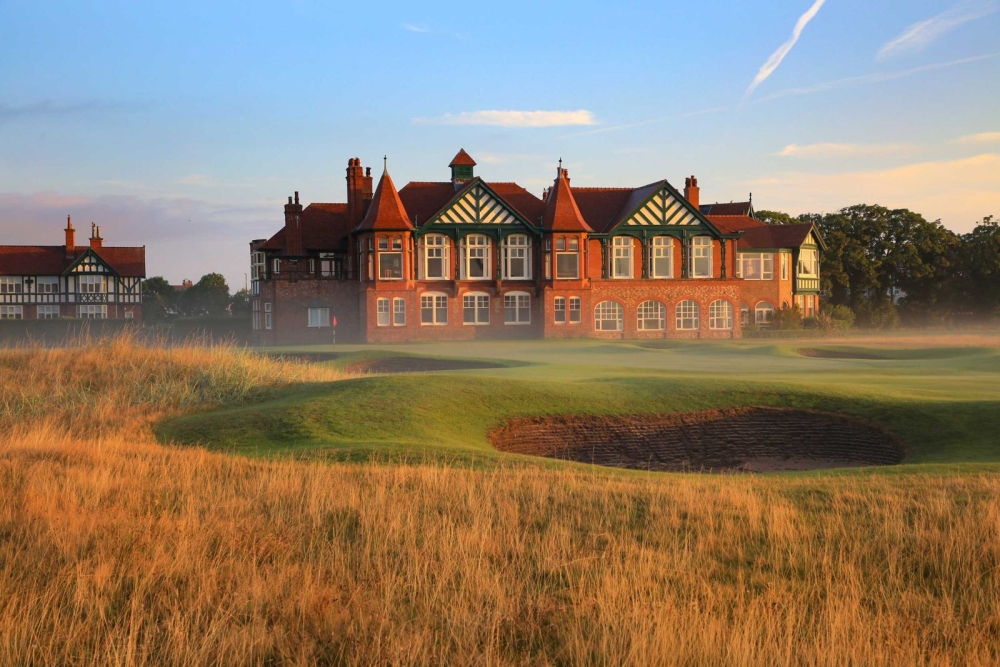
The 1926 Open, the 61st and held between June 23 and 25, was different. For starters Lytham was a new Open venue and spectators were now hit with an admission fee, allegedly as a means of crowd control; for the first time there was both qualifying and a 36 hole cut; and a new R&A rule stated that no competitor would be allowed more than two practice rounds prior to the tournament. In days gone by some players had been able to spend weeks preparing on the championship course - the 1926 restriction meant overseas entrants could compete on more equal terms with their domestic counterparts.
The 1926 Open, the 61st, was different
Sunningdale, St Annes Old Links and Western Gales were the venues for regional qualifying in southern, central and northern sections. They contributed 55, 51 and 11 players, a total of 117. Bobby Jones laid down a marker by dominating the southern section with a 66 and a 68, a seven stroke lead. After his first round it was reported in The Times that “the crowd dispersed awe-stricken. They had watched the best round they had ever seen, or would ever see, and what the later players did they neither knew nor cared.”
Come The Open, superstar professional Walter Hagen, The Open winner at Hoylake in 1924 and leading qualifier from the central section with a total of 143 and one of nine Americans who qualified there, shot a Wednesday 68 to take the lead. A 77 the next day dropped him to third place, while two rounds of 72 placed Jones joint first with American professional Bill Mehlhorn. Hagen was a stroke behind the leaders, while two back were fellow American pros Al Watrous and Scotland born Fred McLeod.
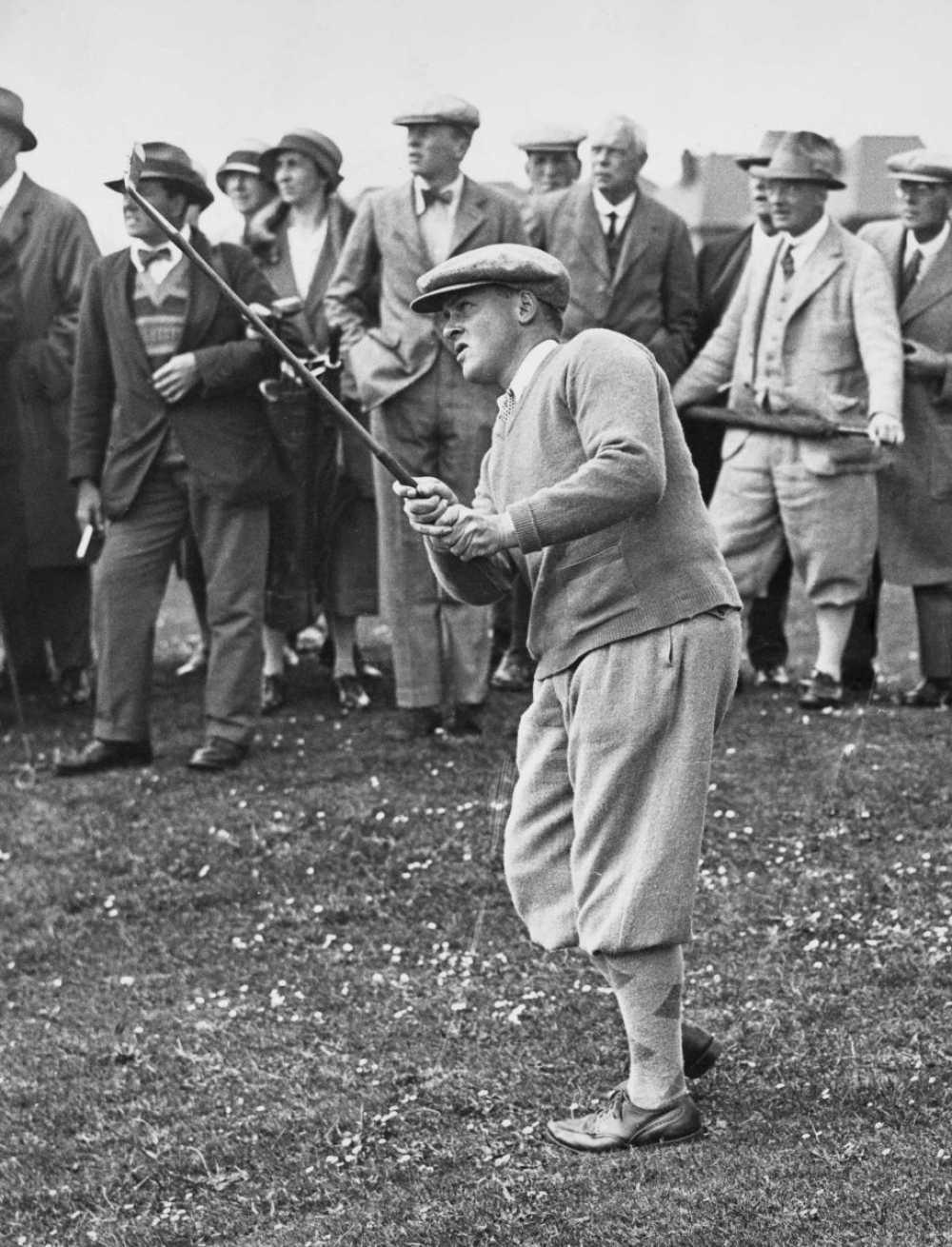
The Friday morning third round saw Bobby Jones record 73, while Watrous stepped up to shoot 69 and take a two stroke lead after 54 holes. In the afternoon, having played 13 holes, Jones remained two behind Watrous, but managed to claw them back and be tied when the pair reached 17. The momentum was with the brilliant amateur, but then - a wild and wayward drive saw the Jones ball come to rest amid the dunes on sandy scrub with Watrous in good shape.
Victory for Al Watrous seemed the likely outcome as he put his second shot on the green.
Jones had around 175 yards to the flag and was hitting blind, and so came to pass one of those moments that make sporting history while breaking opponents’ hearts.
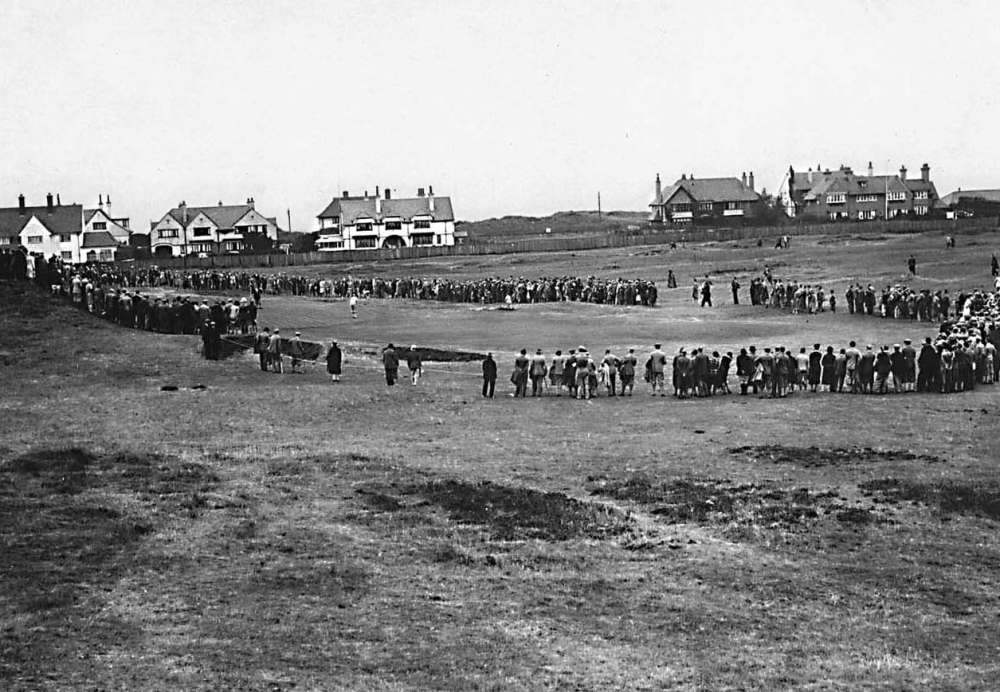
An American reporter wrote: “The sixteenth was halved and then at the crucial seventeenth Jones found a shallow sand pit off the fairway, but a spectacular midiron took him to the green 170 yards away. That stroke won it for Bobby, if single strokes can win championships. He took four to Watrous’ five. With Jones leading by a stroke the players wedged themselves through crowds entirely encircling the eighteenth fairway. Jones’ drive winged straight and far down the middle while Watrous’ tee shot found a bunker and his second another left of the green.”
Reporting for The London Times, Bernard Darwin, describing the precision the Jones strike on 17 had required, observed: “In circumstances when a teaspoonful of sand would have meant irretrievable ruin, it was a staggering shot, and it staggered poor Al Watrous.”
Jones put his ball inside that of Watrous and, rattled, the pro three putted for bogey. Jones made his par and took the lead and parred the last, recording 4-3-4-4-4 on the tough last five holes. He posted 74 for a total of 291, two shots ahead of Watrous.
Walter Hagen, playing behind Jones and Watrous, had an outside opportunity to tie by holing his second to 18, but his ball rolled past the flag and into a bunker. The flamboyant Sir Walter had to settle for a bogey and third place. Writing for the Daily Record he described how when he “entered the club house of Royal Lytham and St Annes, there was a party there. They were merry. When Americans are in this hospitable country on a night such as this the horrid word Prohibition is forgotten.”
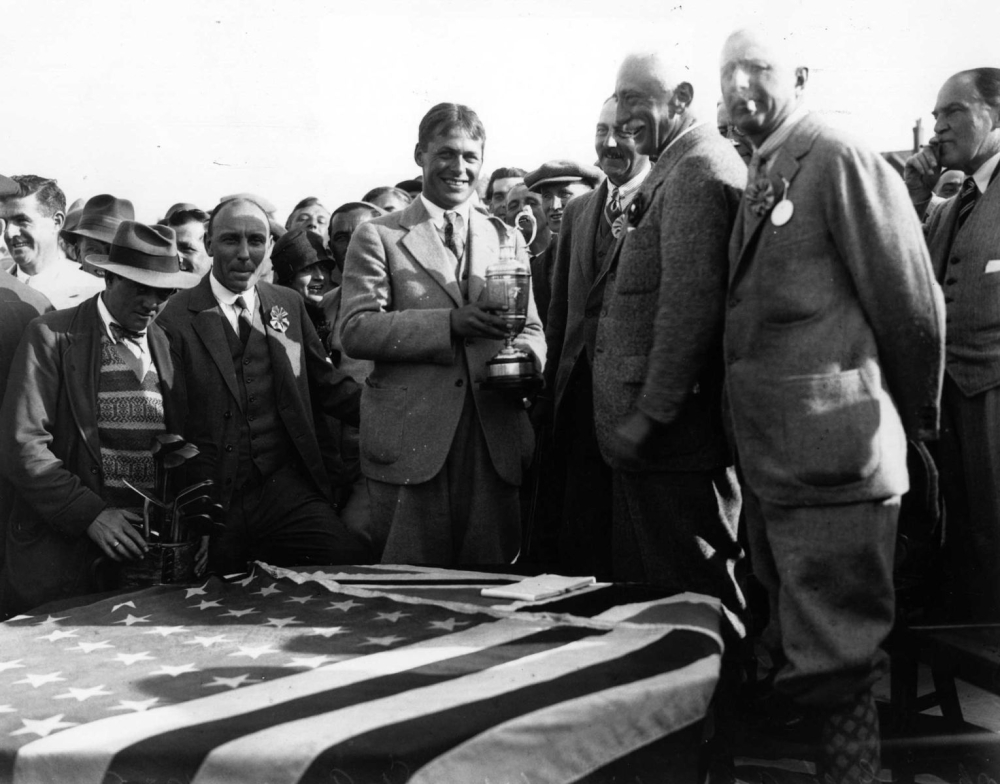
The following year, Bobby Jones successfully defended his Open title on the Old Course at St Andrews (where he had struggled in 1921), and in 1930 won again at Royal Liverpool, what would turn out to be the second leg of his extraordinary Grand Slam: the winning of his era’s four major golf championships in a single calendar year, namely the British Amateur, The Open, the US Open and the US Amateur.
Speaking to The R&A, Jones’ grandson, another Robert T. Jones, revealed that the Grand Slam plan was hatched a century ago.
“He actually set the goal in 1926. When he won the US Amateur in 1925, when they were on the train back to Atlanta, he said to [golf writer and Bobby Jones’ biographer] O. B. Keeler, ‘you know O.B., I won the United States Open in ‘23, the Amateur in ‘24 and again in ‘25. If I could win a USGA title every year between now and 1930, that would be a pretty great accomplishment.’
“Which I think is interesting because it shows he already had 1930 in his mind as a stopping point, because he had no intention of turning professional, and he knew he had to get around to making a living as a lawyer at some point.
“After he won The Open in 1926 he came home and told my grandmother he really believed he could win all four in the same calendar year and he felt like 1930 would be the year to do it because of how the tournaments would line up that year.
And he liked Hoylake. He liked the way the course set up for his game.
“He felt incredibly comfortable playing at St Andrews, the venue for the British Amateur Championship, because he played the Walker Cup there that year and he would win The Open there the next year, so he felt really relaxed about that.
“And he liked Hoylake. He liked the way the course set up for his game, partially because back in those days it played around 6,700 in terms of yardage, which for 1930 was a long course and he never shied away from long golf courses, so he just felt that both were good layouts for him. So he already had all that in his mind.
“The Open Championship, even back then, was the grandaddy of the open tournaments. Bub [as Robert called his grandfather] developed a very deep and abiding love for golf in the United Kingdom, particularly links golf. There was a character and quality to it and a strategic element that really appealed to him.
“One of the things Bub always liked about golf in the UK was when the courses would play hard and fast. He said the ideal would be when you step out on to the first tee and you hear the grass crunching under your spikes.
“Because back then, for the average golfer hard and fast worked better for them because they’re playing shorter shots to the green, but for the more skilled player - and certainly the Championship player - when a course played hard and fast, as many of those did back then, it created a whole different set of challenges. I think it all appealed to his strategic mindset.”
Following the third round of the 1926 Open it seems this highly focussed approach briefly deserted Bobby Jones. He went back to his hotel to address that two shot deficit, but returned to the Royal Lytham course without his competitor’s credentials, and what we now call ‘Security’ refused to let him in.
Jones calmly detoured to a turnstile and became one of thousands of people who, for the first time, were obliged to pay to get into The Open.
In 1926 Bobby Jones was 24, planning his retirement - and already calculating that in 1930 he could have one shot at the never to be repeated sequence of wins at the Old Course, Interlachen, Merion and Hoylake.
He quit tournament golf aged just 28, with no peaks left to summit.