MAGAZINE
Hoylake is not the only place that wrestles with these factors.
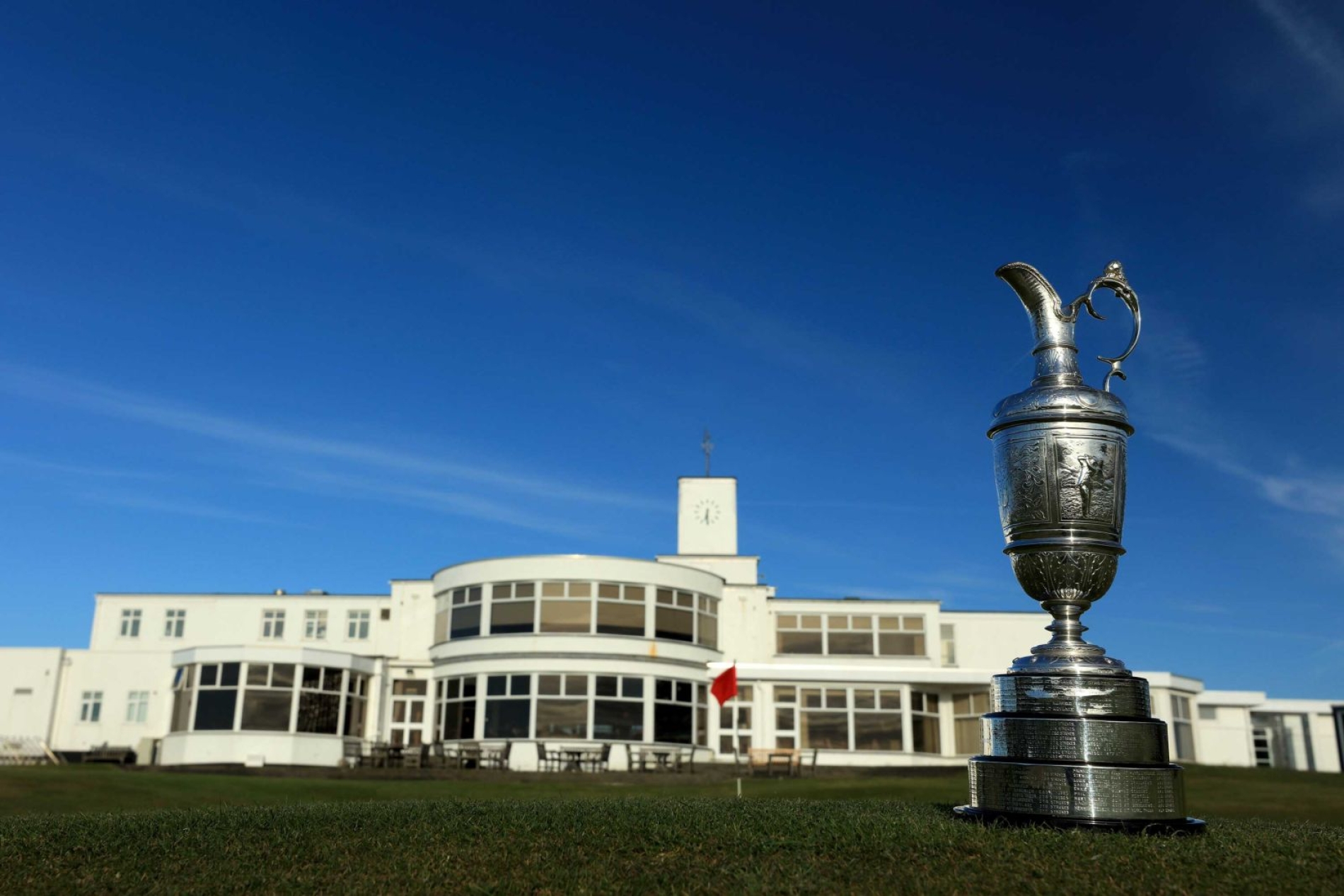
Evolution will be part of the story when The Open returns to Royal Birkdale Golf Club for the 154th edition.
The club just outside Southport is the closest championship venue to Hoylake. It’s just 17 miles across the Irish Sea as the crow flies, a somewhat quicker route than the hour it can take by automobile or minimum of 70 minutes by train.
Birkdale will be hosting its 11th Open, the third most of any course outside Scotland. That number is just four behind Royal St. George’s and two behind Hoylake, even though Birkdale didn’t host its first Open until 1954 – a half-century after the other two. Since the Second World War, only St. Andrews has hosted more.
Like Royal Liverpool, Birkdale presents a tremendous test with scenic holes for television and history that oozes from its clubhouse walls. This was the site of Arnold Palmer’s first Claret Jug, two of Peter Thomson’s five wins, and memorable victories by Hall of Famers such as Lee Trevino, Johnny Miller, and Tom Watson. Funny enough, it’s the only course with multiple Opens on which a British player has never won.
Both venues are financial linchpins for The R&A as the organization continues to maximize revenue from its prime property, one which funds nearly all of their other championships and vast programs around the world.
More than five million people live within a 45-mile radius of each course which is easily accessible by extensive public transportation links. Hoylake drew 261,000 for the week in 2023 – the third largest attendance ever for an Open (a mere 29,880 came through the gates in 1967). Birkdale is a perennial big-draw as well, welcoming 235,000 in 2017 before the championship went to an all-ticket affair.
Factor in the championship’s growing commercial operation, and it’s a fertile region for The Open. More than 80% of the FTSE 100 companies have a presence in the Merseyside and Greater Manchester areas along with numerous U.K. headquarters for international corporations. And Birkdale and Hoylake each have the space for the championship’s burgeoning hospitality needs.
For now.
Birkdale Golf Club began as a six-hole course in 1889
Birkdale Golf Club began as a six-hole course in 1889 before moving to its current location, a rabbit farm at the time, eight years later. The club eventually developed an ethos to host championships. Because of that, it has undergone more tweaks than nearly any Open venue.
The first came a century ago when J.H. Taylor and Fred Hawtree redesigned the layout, undertaking a “gigantic engineering enterprise” according to Taylor. Holes were enhanced through the sandhills, and then the routing changed when its new, now iconic, Art Deco clubhouse opened in 1935.
For the next 90 years, three generations of Hawtrees would reside as the club’s architects, overseeing further alterations as The R&A and PGA of Great Britain made the links one of their preeminent venues. Six Women’s Opens, two Ryder Cups, and countless other events have been held there.
Uncommon for the time, a new hole was built in 1965, the par-3 12th, that replaced a very short par-3 17th. It was taken out because of bottlenecks and the desire for a more stout finish. Fred Hawtree Jr. called the old hole “slightly indigestible.” As more Opens populated its calendar, more tweaks and changes commenced. The green on the present par-5 17th has had more makeovers than Madonna.
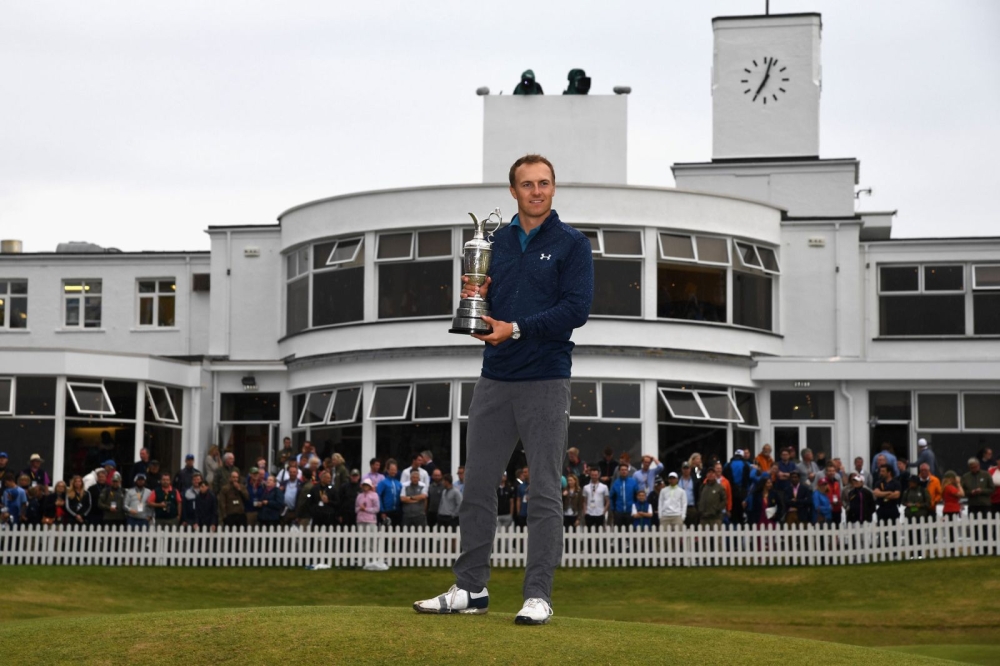
Following its latest Open in 2017, Royal Birkdale initiated a comprehensive course review. The first two days of that championship had been challenging for the field, but after rain and wind on Friday, soft and calm conditions Saturday yielded the lowest single-round average ever in an Open, 69.03, and the lowest score in major championship history: 62 by Branden Grace. Then on Sunday, Jordan Spieth blazed home 5 under par in the final five holes – the best five-hole finish by any major champion.
The club determined it was in danger of standing still.
With the third-generation architect Martin Hawtree nearing retirement, the club chose Tom Mackenzie of Mackenzie & Ebert to work with them on a plan (at Royal Liverpool several years ago, his partner Martin Ebert took the lead on renovations and the new Little Eye 15th). The goals were to make the layout tougher for the elite player yet easier for the high handicapper.
They focused on the par-3s. All four played similar yardages running in similar directions. Bunkers and teeing grounds for all levels of golfers were also assessed.
When presented with the plan, The R&A commented on a few back tees, but tellingly was most interested in infrastructure opportunities: a new ring road and installation of permanent sewage tanks for all hospitality areas.
With the stakeholders on board, and membership approval, work was completed in 2024. What stands out above ground are two new holes.
The old par-3 14th, famous for Hale Irwin’s one-inch missed putt in 1983, and the par-5 15th, where Jordan Spieth sank his 48-foot eagle putt, have been removed.
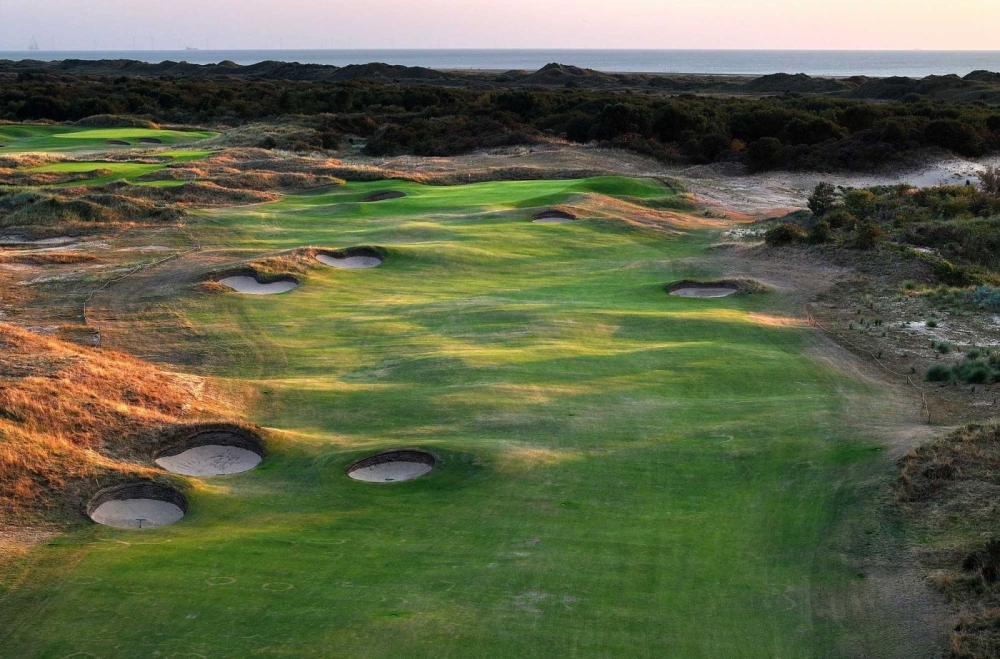
Now, players encounter a three-minute walk from the 13th green to the tee of a new par-5, the 14th hole. Straightaway with 12 bunkers – the most on the course – the hole can stretch over 600 yards. The approach is slightly uphill into the prevailing wind to a green with some of the sharpest run-offs on the course. Expectations are that it will play more difficult than the previous hole, which was the easiest in 2017 at an average of 4.66 strokes.
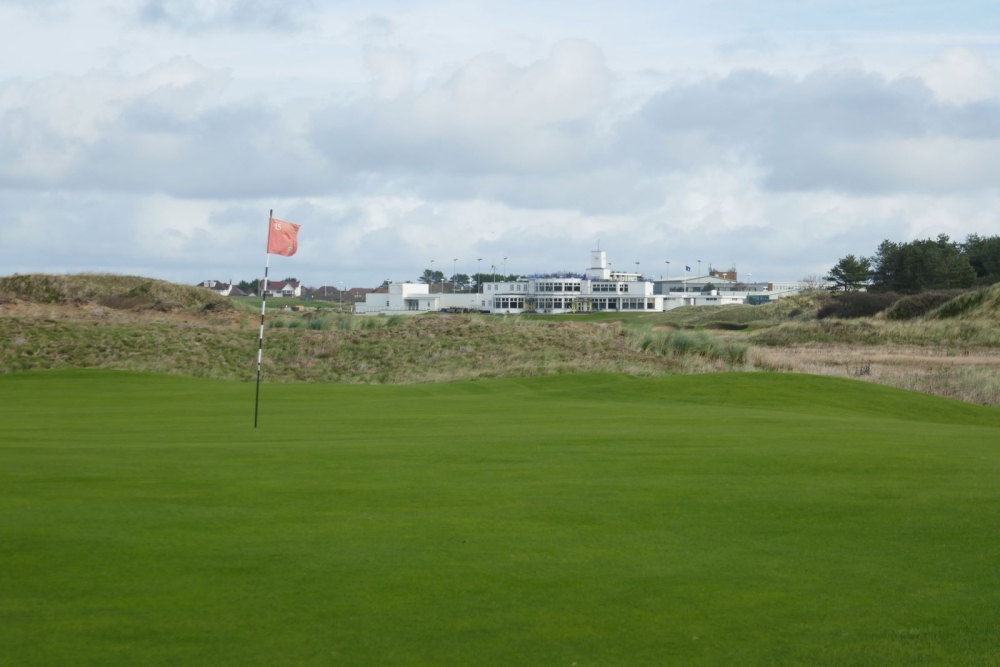
Then comes a new par-3, the 15th. Playing back toward the clubhouse, the hole will be the longest par-3 on the course at 241 yards. The green has many features of a classic Redan: tilted to the left and falling away from the front quarter of the green to the back. There’s a fall-off of three to four feet around the entire green with two bunkers left. The front one is six feet in depth.
The chances of another Speith-like finish have been diminished.
Notable changes were made to every hole. New, elevated greens have been built on the drivable par-4 5th hole and the par-3 7th hole. Run-offs around all of the greens are more prominent with tight-turf areas expanded. Bunkers have been repositioned and made slightly larger and deeper, although there are less of them – down from 123 in 2017 to 105 now. And the finishing hole is more tenacious. The alternate championship teeing ground in the dunes has been eliminated. A new back tee was built around 500 yards with repositioned bunkers demanding two steely shots of its champion.
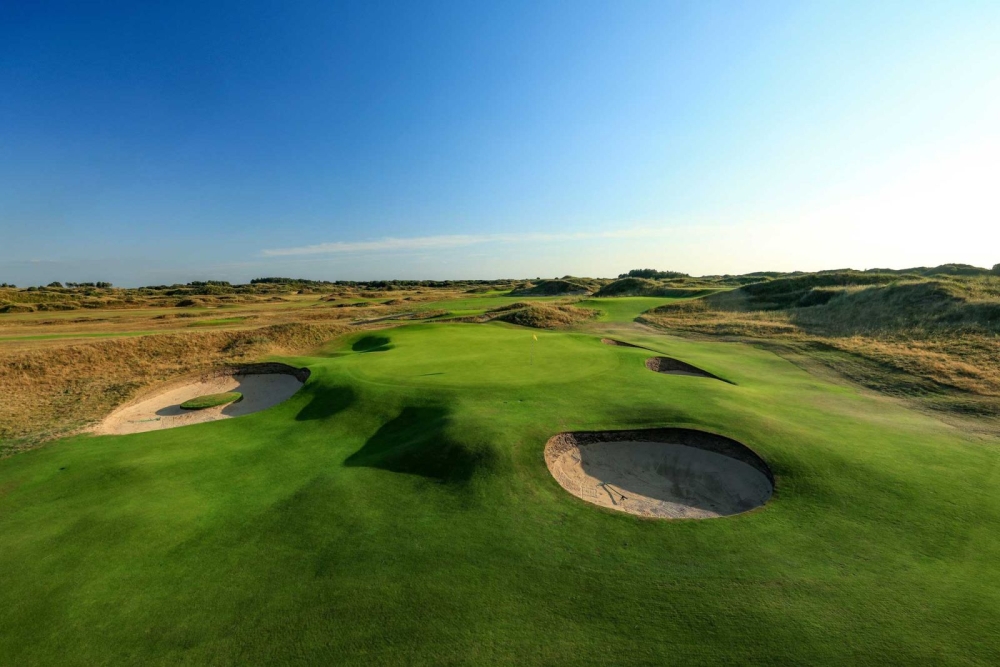
“The game of 100 years ago isn’t the game of today,” Mackenzie recently said. “You’ve got the choice of keeping things exactly where they are, which is sort of accepting passive change in many ways, or you can help think things through, and come up with balanced proposals that respect the heritage but also accept that the game has moved on.”
As Bledge addresses, Hoylake has not been immune to those demands of change.
The original 9-hole layout across the Hoylake Race Course is unrecognizable. In fact, when it was expanded to an 18-hole course of approximately 5,000 yards in 1872, it was redesigned almost immediately.